
On this page
- How many people live outside city limits here?
- Does Kaufman County require a permit to remove a tree?
- What does the City of Kaufman's tree rule say?
- What about Crandall, Kemp, Talty and the other towns?
- Who decides when you can burn brush in the county?
- Which storms have hit the south and east of the county?
- What changes for tree work on rural land?
How many people live outside city limits here?
More than half the county. The Census Bureau's Vintage 2025 figures count 209,235 people in Kaufman County, up 44% from an April 2020 base of 145,337, and 106,822 of them live outside every city, town and village. That unincorporated population grew about 31.5% since 2020 (checked Nov 14, 2026). The Texas Tribune reported in March 2026 that Kaufman was one of four Texas counties among the nation's 10 fastest-growing from 2024 to 2025.
It's a big, mostly owner-occupied county: 780.79 square miles of land, with 78.6% of homes owner-occupied and a median owner-occupied home value of $290,800 (Census QuickFacts, ACS 2019–2023; checked Nov 14, 2026).
Does Kaufman County require a permit to remove a tree?
This site found none. The county's "Develop Property" page lists Development Services (permits, septic and unincorporated areas), On-Site Sewage Facilities and Floodplain Management, and says nothing about tree removal or clearing (checked Nov 14, 2026). Deed restrictions and HOA rules can still limit what you cut, so check those.
Kaufman County Development Services is at 101 N. Houston Street in Kaufman, open 8 a.m. to 4:30 p.m. weekdays, with no direct phone listed; floodplain questions go through the county's Engineering Department. The county's main line is 469-376-4100, at the Kaufman County Justice Center, 1902 E. US Highway 175 (all checked Nov 14, 2026). The state law that limits city tree fees, Local Government Code §212.905, governs cities, not counties.
What does the City of Kaufman's tree rule say?
The City of Kaufman's tree preservation rule is §02.03.072 of its Subdivision Ordinance (Ordinance O-05-24, adopted April 22, 2024), and it reaches past the city limits: the chapter's provisions "expressly extend to all areas inside the City limits and throughout the City's extraterritorial jurisdiction (ETJ)" (checked Nov 14, 2026). So a rural property near Kaufman can fall under it. The main points:
- What it covers (b): all vacant and undeveloped property, and all property to be redeveloped, including additions and alterations.
- Built home lots (c)(1): the section doesn't apply to individual single-family, duplex and townhouse lots after initial development and final inspection of the home. Single-family and duplex lots of ten acres or less created by a Minor Plat are exempt too. But clear-cutting is prohibited on single-family, duplex and townhouse lots of ten acres or larger.
- Dead or diseased trees (c)(8): exempt, unless the tree was required to be planted under an approved landscape or tree mitigation plan.
- Emergencies (c)(4): the City Manager may waive the section during emergencies such as tornadoes or floods.
- Less-favored species (c)(10): silver maple, common hackberry, bois d'arc, chinaberry, mulberry and cottonwood are exempt if under 8 caliper inches or in a floodplain.
- Clearing (d)(1) and (d)(2): no clear-cutting in any zoning district without a permit; an approved tree preservation plan or site plan serves as one. Clearing underbrush, but not grubbing, needs no permit.
- Big trees (d)(3): a tree of 18 caliper inches can't be removed unless it's in an exempt area, the city approves based on its health and condition, or the city approves after assessing a tree mitigation fee.
- Replacement (g): for removed trees of 18 inches or more, replacements must equal three times the combined diameter removed, at least 3 caliper inches each.
- Penalties (j): each tree removed or transplanted without a permit is a separate offense.
The same ordinance notes that Kaufman County assigned the city its authority to approve plats in the ETJ, with the more stringent of the city or county standards applying (§02.03.061). Mitigation fee amounts are reviewed every year, so this page doesn't quote one; ask the city.
What about Crandall, Kemp, Talty and the other towns?
Each incorporated town sets its own rules, and this site didn't review tree rules for any of them, so call the town before removing a large tree inside its limits. State law §212.905 applies in every one of them. What the Census Bureau's 2025 file does show is who is incorporated and how fast they're growing (checked Nov 14, 2026):
| Place | Status | 2020 base | July 1, 2025 |
|---|---|---|---|
| Crandall | City | 3,840 | 7,730 |
| Mabank | Town (5,401 of its 7,294 residents in Kaufman County) | 2,829 | 5,401 |
| Talty | Town | 2,504 | 3,299 |
| Combine | City (1,841 of 2,769 in Kaufman County) | 1,360 | 1,841 |
| Oak Ridge | Town | 779 | 1,671 |
| Kemp | City | 1,117 | 1,453 |
| Post Oak Bend | City | 684 | 978 |
Crandall roughly doubled since 2020, and Oak Ridge more than doubled. Heartland isn't an incorporated place in the Census file; it's a community, not a city. This site couldn't confirm whether any of it lies in a nearby city's extraterritorial jurisdiction, so check your deed restrictions and HOA rules, and ask the county if you're unsure.
Who decides when you can burn brush in the county?
The Commissioners Court. Under Local Government Code §352.081, a county's commissioners court can order outdoor burning prohibited or restricted in all or part of the unincorporated area when the Texas A&M Forest Service finds drought conditions or the court finds a public safety hazard. An order runs no more than 90 days, and a knowing violation is a Class C misdemeanor (checked Nov 14, 2026). The Forest Service notes a ban can be put in place by a county judge or commissioners court.
Kaufman County's wildfire page tells residents to follow local burn ban guidance and to direct questions to the county Fire Marshal's office (checked Nov 14, 2026). Bans change with the weather, so check the Forest Service's burn ban map or call the county before you light a brush pile. Even without a ban, the TCEQ rule's household-waste exception, which covers branch trimmings from your own property, applies where the local government doesn't provide or authorize trash collection, and TCEQ's guide says not to burn anything during a burn ban or a red flag warning (checked Nov 14, 2026). Kaufman County is in the Dallas–Fort Worth ozone nonattainment area, and there the rule's separate exception for burning trees and brush is limited to right-of-way maintenance, land clearing and canal work when no practical alternative exists (checked Nov 14, 2026).
Which storms have hit the south and east of the county?
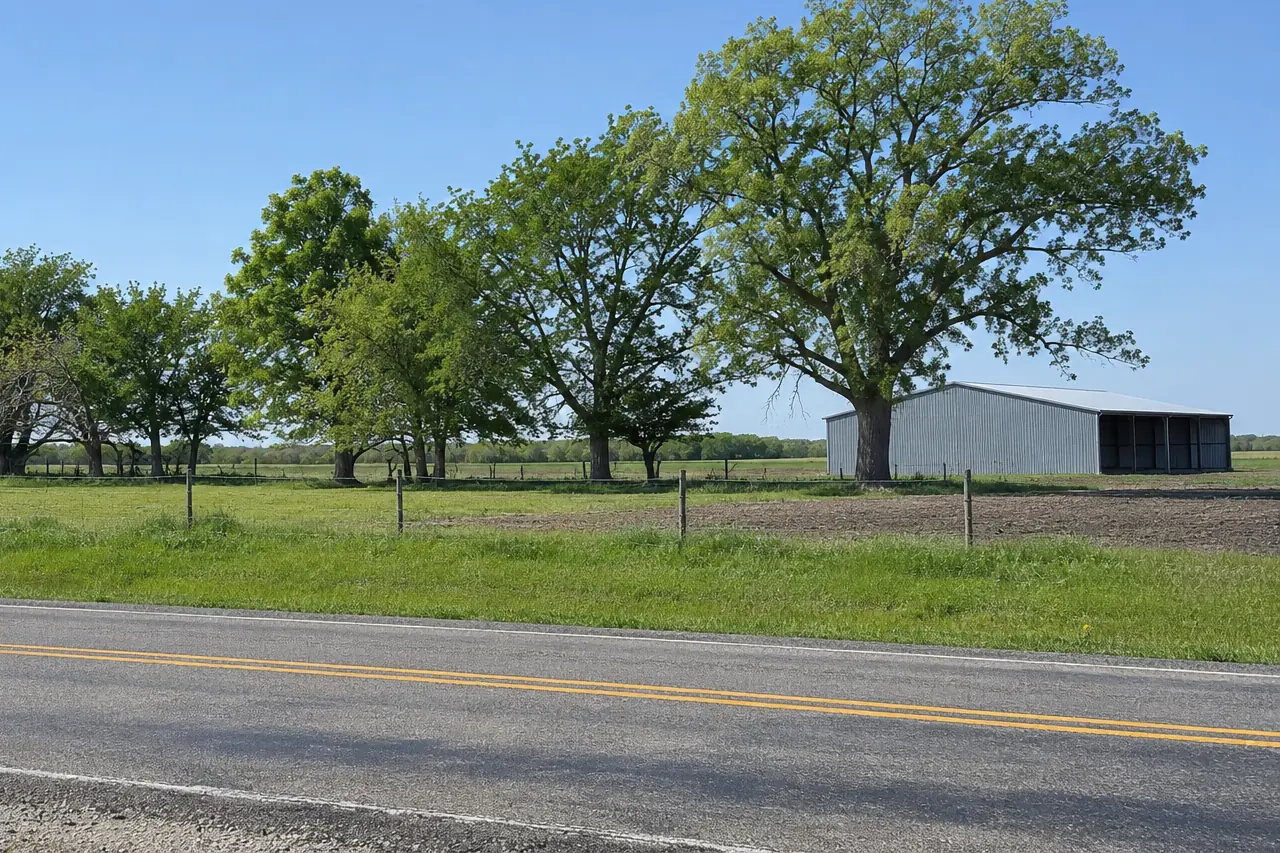
- May 29, 2019, Kemp and Mabank: an EF2 tornado with winds estimated at 120 mph ran about 4 miles from near Tolosa across Cedar Creek Reservoir toward Mabank, uprooting and snapping large hardwood trees; one home was significantly damaged and one person had a minor injury (NWS, NOAA Storm Events Database). NBC 5 news described dozens of trees uprooted or shredded (checked Nov 14, 2026).
- May 16, 2020, near Mabank: an EF0 with 85 mph peak winds came in from Van Zandt County, "moving into extreme southeast Kaufman County," with scattered tree and outbuilding damage, and ended near County Road 4007 and FM 90 (NWS; checked Nov 14, 2026).
- April 5, 2022, Scurry to Kemp: just after midnight, thunderstorm winds of 70 to 75 mph cut an 8.4-mile swath of tree, sign and minor roof damage from near Scurry to US 175 north of Kemp. The NWS ruled it straight-line wind, not a tornado; no injuries (checked Nov 14, 2026).
- Elsewhere in the county: an EF0 near Poetry in the north on April 3, 2012, the same day as the Forney EF-3, and an EF-1 near Elmo, north of I-20, on Oct. 20, 2019 (NWS; inForney news report).
Kaufman County's own tornado page states that the county "does not have public tornado shelters," so plan your own shelter ahead of storm season. The Office of Emergency Management is at 469-376-4163 (checked Nov 14, 2026). The full list of storms and what to do after one is on the storm page.
What changes for tree work on rural land?
- 811 still applies. The One-Call law is statewide; grinding or digging 16 inches deep with powered equipment needs a locate request at least 48 hours ahead. The law has an exception for certain agricultural operations (Utilities Code §251.156(a)(4)), so ask before assuming it covers your job (checked Nov 14, 2026).
- Overhead lines. The six-foot law (Health and Safety Code §752.004) applies to every high-voltage overhead line. This site couldn't confirm which electric provider serves which part of the county, so call the one on your bill.
- Clearing near Kaufman. In the City of Kaufman and its ETJ, clear-cutting on a single-family lot of ten acres or more is prohibited, and clear-cutting land needs a permit (§02.03.072).
- The brush. Burn bans, above, decide whether a pile can be burned at all.
Requests from anywhere in the county go to one independent contractor who works across Kaufman County. Call (469) 689-1811 or use the request form and pick "Elsewhere in Kaufman County." For Forney's own ordinance, see the Forney rules page; for Terrell, the Terrell page.
Sources: Census Bureau, Texas city and county population file (Vintage 2025); Census QuickFacts, Kaufman County; Texas Tribune, Mar. 26, 2026; Kaufman County, Develop Property, Wildfires, Tornadoes and Office of Emergency Management; City of Kaufman Subdivision Ordinance (adopted Apr. 22, 2024); Tex. Local Gov't Code §212.905; Local Gov't Code §352.081; Texas A&M Forest Service, burn bans; 30 TAC §111.209; TCEQ GI-415; TCEQ, DFW ozone nonattainment status; NOAA Storm Events Database, May 29, 2019; NBC 5, May 30, 2019; NWS statements for May 16, 2020 and Apr. 5, 2022; NWS, Apr. 3, 2012 summary; inForney, Oct. 22, 2019; Tex. Utilities Code ch. 251; Tex. Health & Safety Code §752.004. All checked Nov 14, 2026.